Dietary Patterns Around Menopause
A plain-English look at food patterns, midlife weight change, and what is still too early to overclaim.
Why this is harder than it looks
Search "menopause diet" and you will find meal plans, supplements and promises about hormones. The research is quieter and more useful than that. It mostly tells us about broad eating patterns, about what happens to body composition in midlife, and about a few specific foods that have been tested for hot flashes. It does not hand us a single proven plan.
That matters because a lot of advice in this space borrows the confidence of science without the evidence behind it. So here is what the studies actually say, and where they stop.
What actually changes in your body
The clearest picture comes from SWAN (the Study of Women's Health Across the Nation), which followed women for 18 years and measured body composition from before to after their final period [1].
Before the transition, fat mass was already creeping up, by about 1.0% a year. At the start of the menopause transition, the rate of fat gain doubled and lean mass began to decline. Those changes continued until roughly two years after the final menstrual period, then leveled off [1]. In absolute terms, the average participant gained about 0.25 kg of fat a year before the transition and about 0.45 kg a year during it, while losing about 0.06 kg of lean mass a year [1].
Here is the part that surprises people: body weight rose in a straight line through the premenopausal years with no extra acceleration at the transition [1]. In other words, the scale may not tell you much. The change is in what the weight is made of.
The Mediterranean-style pattern
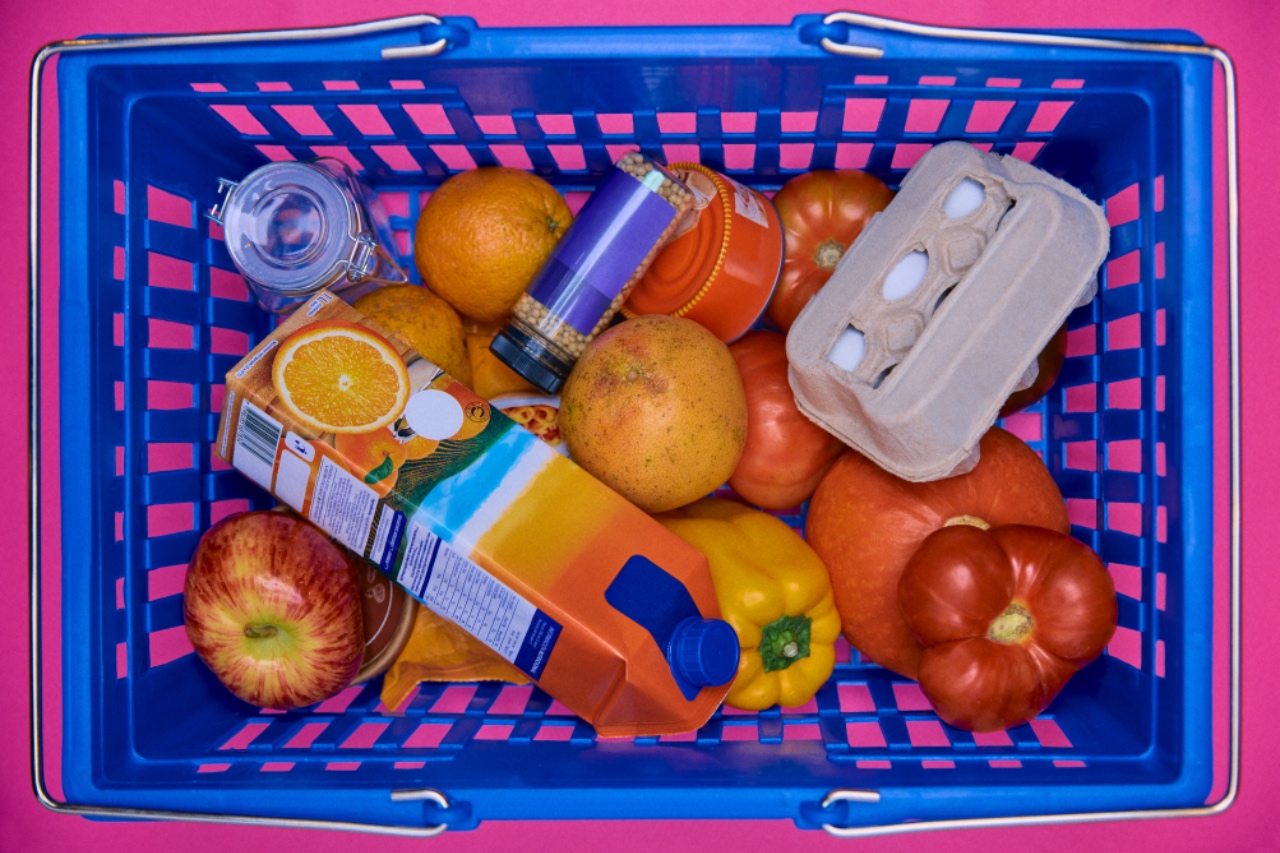
A Mediterranean-style pattern (vegetables, fruit, legumes, whole grains, nuts, olive oil, fish, and less red and processed meat) is the most studied option for midlife women. The European Menopause and Andropause Society (EMAS) reviewed the evidence in a 2020 position statement, and their conclusions are worth reading closely because they are careful about strength of evidence [2].
Heart health. Observational studies consistently link this pattern to lower cardiovascular disease, with relative risks of about 0.70 to 0.80 in meta-analyses. But EMAS also notes that a 2019 Cochrane review judged the trial evidence still uncertain [2].
Waistline. Intervention trials suggest the pattern helps prevent an increase in central fat. Some of those trials also cut calories, which makes it hard to separate the effect of the food pattern from the effect of eating less [2].
Hot flashes. Only one cohort study had looked at this directly: in more than 6,000 Australian women, closer adherence was linked to a 20% lower risk of vasomotor symptoms. In the Women's Health Initiative trial, a small benefit showed up only in women with mild symptoms [2].
Bone. Only observational evidence was available, and a one-year trial found no overall effect on bone density. EMAS says the pattern should not be used as the main treatment for osteoporosis [2].
A 2024 systematic review found just seven intervention studies of Mediterranean diets in menopausal women. Together they showed reductions in weight, blood pressure, triglycerides, and total and LDL cholesterol [3]. Encouraging, but seven studies is a small base.
Plant-forward eating and soy
Soy gets a lot of attention because it contains isoflavones, plant compounds that act a little like estrogen. The evidence has been honestly mixed for years.
A Cochrane review of 43 randomized trials found no conclusive evidence that phytoestrogen supplements reduce how often or how severely hot flashes happen [4]. A handful of trials using extracts high in genistein (one type of isoflavone) did suggest fewer hot flashes, and the authors called for more research. They also noted that many trials were small, short and of poor quality, and that placebo responses were large, ranging from 1% to 59% in most trials [4].
In 2023, The Menopause Society reviewed nonhormone options and did not recommend soy foods, soy extracts or isoflavones for hot flashes, describing the evidence as mixed with significant limitations [5]. It also did not recommend dietary modification in general, citing limited trial evidence [5].
You may have seen headlines about a plant-based diet that cut hot flashes dramatically. That trial (WAVS) randomized 84 postmenopausal women to a low-fat vegan diet with half a cup of cooked soybeans daily, or to no change, for 12 weeks. Moderate to severe hot flashes fell by 88% in the diet group, and participants lost an average of eight pounds [6]. It is an interesting result. It is also one small trial, promoted by a nonprofit whose president led the study, and the weight loss makes it hard to know what drove the change [6]. Notably, The Menopause Society lists weight loss itself among options with some support for hot flashes [5].
Protein through the day
Because lean mass starts to decline in the transition [1], protein is worth a look. Sports nutrition guidance suggests 1.4 to 2.0 grams of protein per kilogram of body weight per day for most people who exercise, ideally spread across meals every three to four hours [7]. A large review of trials found that eating more protein produces small additional gains in lean mass when paired with resistance training [8].
Two caveats. Most of this research was not done in women going through menopause. And the benefit shows up alongside strength training, not instead of it. (Our protein and strength training briefs go deeper.)
What it is still too early to claim
- That any branded "menopause diet" balances hormones or prevents midlife weight change. We did not find trials that show this.
- That soy or isoflavone supplements reliably treat hot flashes [4][5].
- That a Mediterranean pattern protects bone on its own [2].
- That protein timing matters as much as total protein and training for midlife women specifically.
The practical middle ground
A Mediterranean-style, mostly plant-forward way of eating, with enough protein spread through the day, is a reasonable and well-supported default for heart and metabolic health [2][3][7]. It is not a cure for hot flashes and it will not stop every change in body composition. If symptoms are affecting your life, that is a conversation for your clinician, because there are treatments with much stronger evidence than any food.
Sources
- Greendale GA, Sternfeld B, Huang M, et al. Changes in body composition and weight during the menopause transition. JCI Insight. 2019.
- Cano A, Marshall S, Zolfaroli I, et al. The Mediterranean diet and menopausal health: An EMAS position statement. Maturitas. 2020.
- Gonçalves C, Moreira H, Santos R. Systematic review of mediterranean diet interventions in menopausal women. AIMS Public Health. 2024;11(1):110-129.
- Lethaby A, Marjoribanks J, Kronenberg F, Roberts H, Eden J, Brown J. Phytoestrogens for menopausal vasomotor symptoms. Cochrane Database of Systematic Reviews. 2013;(12):CD001395.
- Shufelt CL, Brown V, Carpenter JS, et al. The 2023 nonhormone therapy position statement of The North American Menopause Society. Menopause. 2023;30(6):573-590.
- Barnard ND, et al. A dietary intervention for vasomotor symptoms of menopause: a randomized, controlled trial. Menopause. 2022 (WAVS trial).
- Jäger R, Kerksick CM, Campbell BI, et al. International Society of Sports Nutrition Position Stand: protein and exercise. Journal of the International Society of Sports Nutrition. 2017;14:20.
- Nunes EA, Colenso-Semple L, McKellar SR, et al. Systematic review and meta-analysis of protein intake to support muscle mass and function in healthy adults. Journal of Cachexia, Sarcopenia and Muscle. 2022;13(2):795-810.
Forme is for education and does not replace advice from your clinician.